Smart Watch SDK for Health & Sports Brands
OEM/ODM wearables. Your own app. A clear path to production.
Build your health or sports product with IWO smartwatches or screenless bands. Connect to your own app through Android and iOS SDKs, with 18 health data groups for your service. Start with a sample, test your data flow, then plan production with us.
Choose the Wearable That Fits Your Users
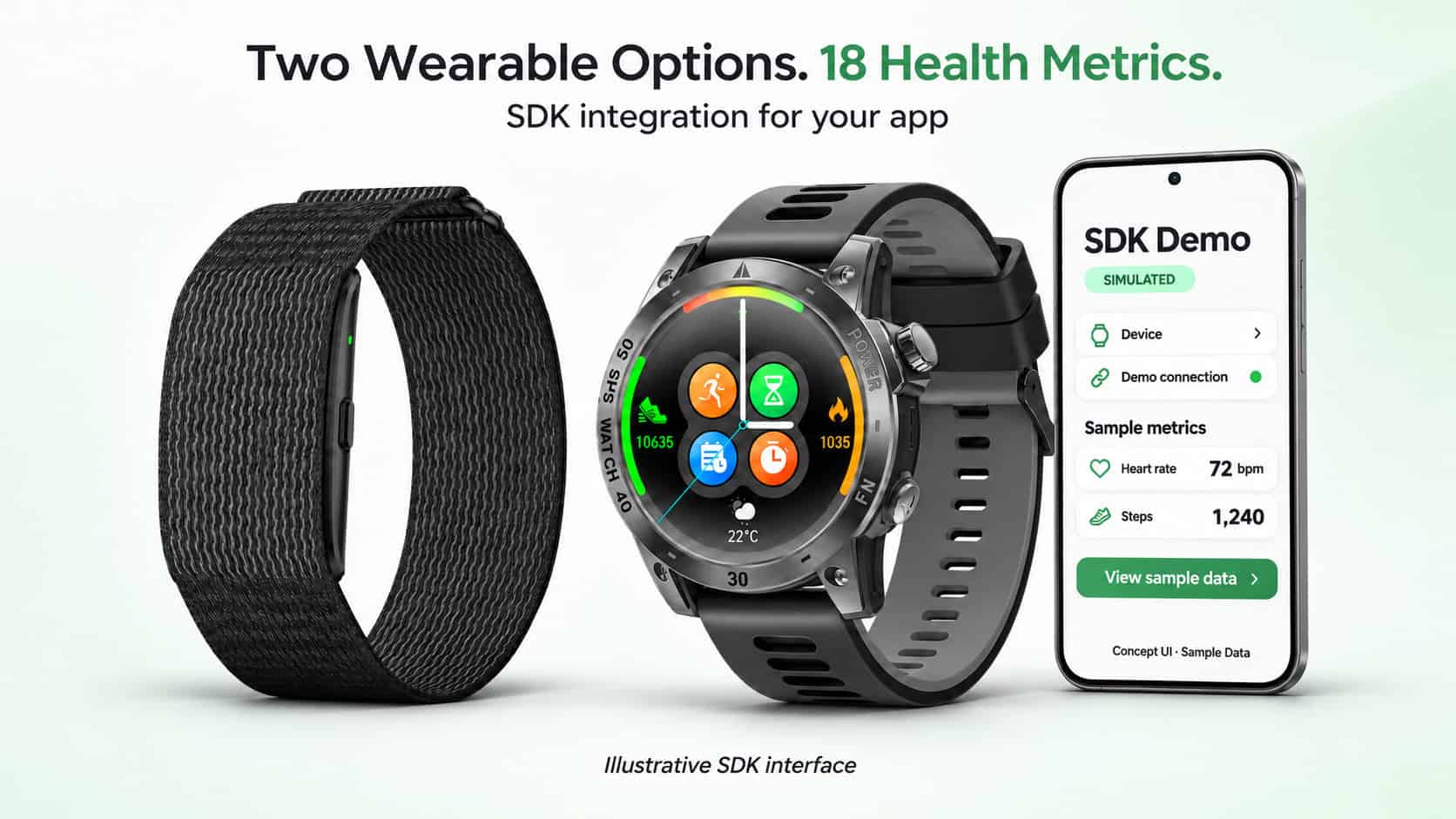
Both options support the same 18 health data groups after SDK integration. Choose based on how your users want to view data and interact with the device.
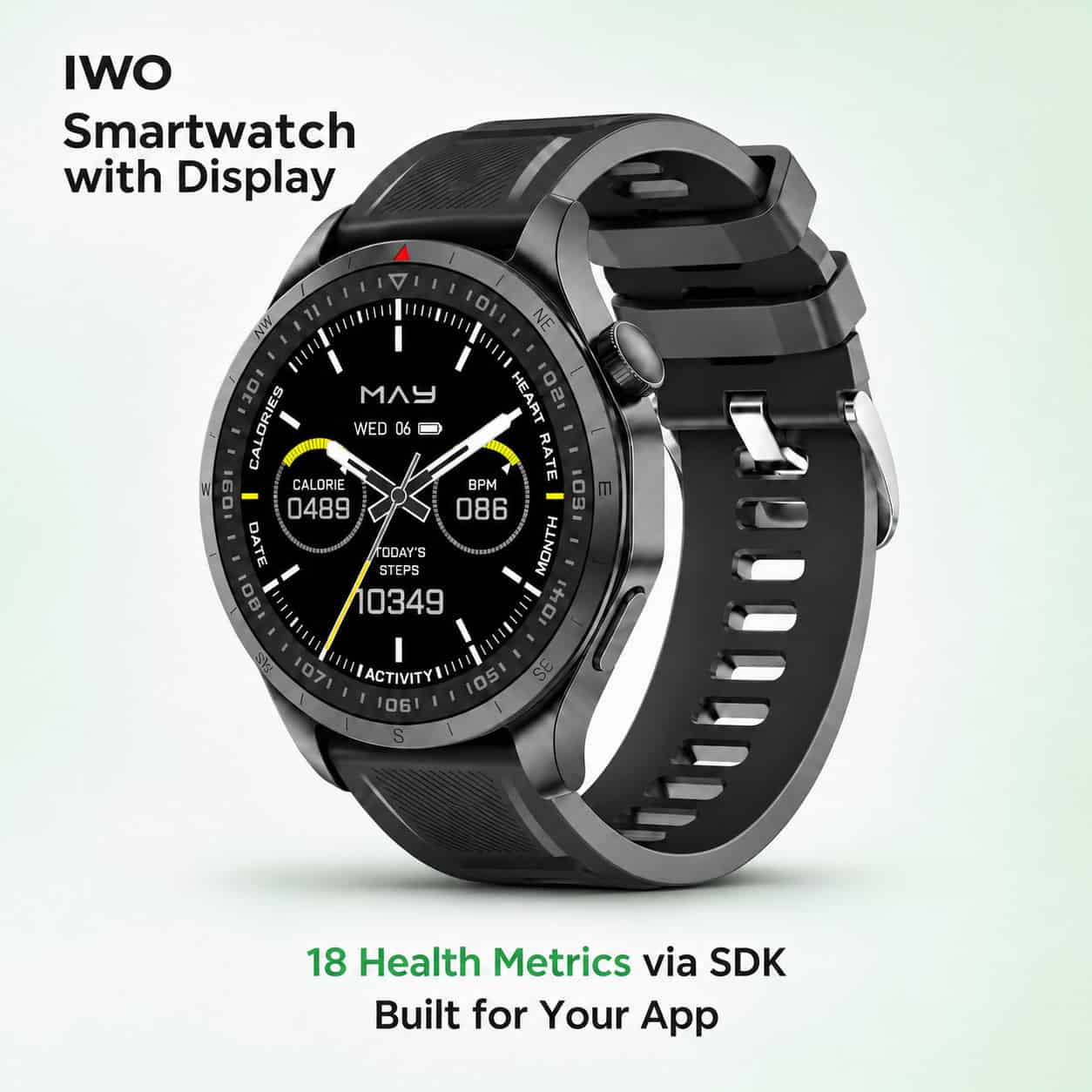
Smartwatch with Display
Let users view information and use controls on their wrist. Discuss sports, GPS, and other on-watch features as part of your project.
Screenless Smart Band
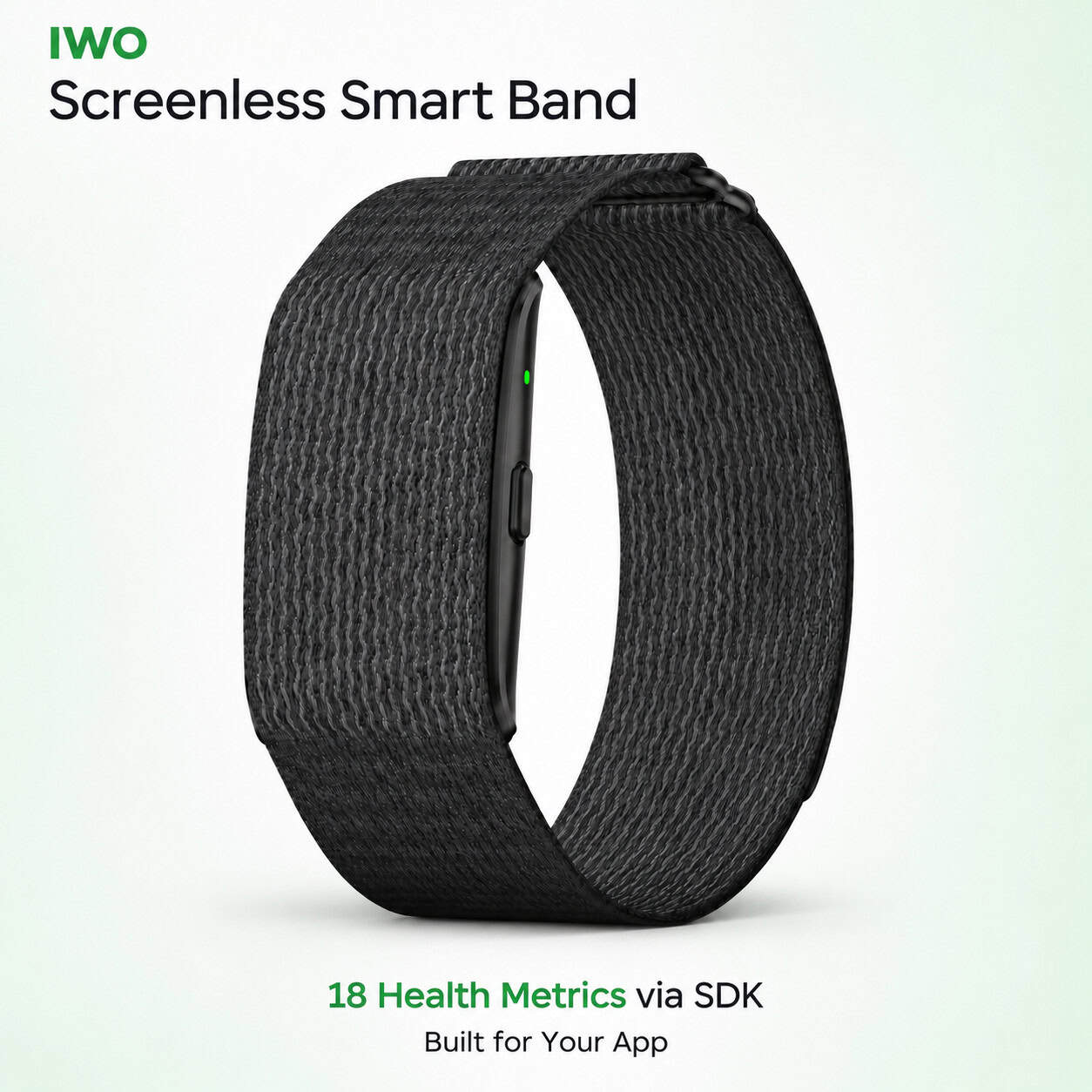
Keep the experience simple on the wrist, with data and controls in your mobile app.
Build Your Service Around Your Own App
Build the views, reports, and services that make your brand useful to users. Your team leads the app experience; we help define the device and integration work.
Use this approach for wellness programs, sports recovery services, or your own wearable platform.
Access 18 Health Metrics Through the SDK
After SDK integration, both our smartwatches with a display and our screenless smart bands give your app access to the following 18 groups of health data and monitoring features. Some groups include several related data fields.
1. ECG
2. HRV
3. Heart Rate
4. SpO2
5. Respiratory Rate
6. Apnea
7. Cardio Load
8. OSAHS
9. Skin Temperature, Body Temperature
10. Blood Glucose Monitoring
11. Sleep Monitoring, Stress Monitoring
12. Pedometer, Distance, Calorie
13. Standing Time Monitoring
14. Active Time Monitoring
15. Metabolic Equivalent of Task
16. EDA (GSR)
17. Fall Detection
18. Bioimpedance Analysis: BMI (Body Mass Index), BMR (Basal Metabolic Rate), Body Fat Percentage, Lean Body Mass, Muscle Percentage, Muscle Mass, Subcutaneous Fat, Body Water, Skeletal Muscle, Bone Mass, Protein
Choose the data your service needs. We will help your team map each field to your app, including its format, unit, update interval, and transfer method.
Also define timestamps and how your app handles missing records, duplicate records, and a lost connection.
Health Metrics and Raw Signals: Define What You Need
The 18 health metrics describe the data your app can receive. Access to these metrics does not, by itself, mean access to every raw sensor signal.
If your team needs raw PPG, ECG waveforms, motion samples, or continuous streaming to build its own algorithms, tell us separately. We will review the required signals, sample rate, transfer speed, and firmware work. This is a separate technical scope from the 18-metric integration.
Plan the Path from Wearable to Your Platform
For a Bluetooth project, the wearable connects to your mobile app through the SDK. Your app can then pass data to your backend using the architecture your team defines. We will review pairing, reconnection, data sync, and device status with your developers.
If your project needs a phone-free connection, tell us at the start. Cellular hardware and direct server integration need their own review. A screenless design does not automatically mean a cellular connection.

What’s Included in Your SDK Integration Package?
Give your developers a clear starting point. For projects using this SDK, the integration materials cover Android and iOS. We confirm the device, firmware, and SDK version before your sample test.
Android and iOS SDK Resources
Use the mobile SDK resources to connect your app to the wearable over Bluetooth Low Energy (BLE).
Setup and Connection Guides
Follow the setup steps and connection examples. These cover device scanning, connection status, and the checks needed before data exchange.
Demo Projects and Sample Code
Give your team practical examples to study and adapt. Test the connection flow with a sample device before adding it to your own app.
API and Data Reading Documentation
Review methods, inputs, and returned data. Use the documented interfaces to plan how your app reads measurements and stored records.
Device Settings and Feature Checks
Check which functions the connected device reports. Match the available settings and data interfaces to your project requirements.
Firmware Update Guidance
Review the documented update flow for supported hardware. Firmware files and the update method must match the selected device.
Your final delivery list and usage rights are agreed for your project. Demo code does not mean full firmware or algorithm source code. Ask us to confirm the fields and raw signals you need for your sample.
Choose the Right Level of Customization

App Integration
Add device data and controls to your app using the SDK resources above. Agree on the functions your team will build and the integration help you need.
Firmware Customization
Discuss changes to device settings, data schedules, alerts, and SDK events. We will define the development scope, cost, and delivery plan before work starts.
Hardware and Brand Design
Choose the wearable shape, strap, colors, logo, and packaging that suit your brand. Projects that need a new case, sensor setup, or circuit board follow a separate hardware development plan.
Test the Complete Data Flow Before Production

My advice is simple: test the data in your own app before you approve a production order. A successful connection is only the first step.
First, agree on the 18-metric list and the integration scope. Next, connect samples to your app and check every data field in the 18 groups. Then test reconnection, data history, timestamps, sync behavior, and battery life under your planned use. Finally, approve the sample and production specification.
If your project includes raw signals or custom functions, add separate checks for those items. Keep a clear record of the hardware, firmware, app, and SDK versions used in each test.
From SDK Samples to OEM/ODM Production
We support the path from requirements review and sample testing to customization and manufacturing. You get a clear scope for the device, software integration, and production work.
A typical full ODM project starts at 3,000 units per model. Final quantity, cost, and timing depend on the agreed design and development scope.

Frequently Asked Questions
Can both a smartwatch and a screenless band provide all 18 health metrics?
Yes. The smartwatch and screenless band options offered for this project support the same 18 health data groups after SDK integration.
Does this list contain exactly 18 individual data fields?
The list has 18 groups of health data and monitoring features. Several groups include more than one field. For example, the temperature group includes skin and body temperature, while bioimpedance analysis includes the body composition values listed above.
Can we test the SDK before a production order?
Start with sample testing. Tell us your target phone systems and required data so we can confirm the sample device and SDK version for your project.
Can we use our own app?
Yes. We can support SDK integration for your own app. Share your target Android and iOS versions and app requirements so we can agree on the integration package and testing plan.
Are all 18 metrics raw sensor data?
Do not treat the 18-metric list as a raw-signal specification. If you need raw waveforms or sensor samples, we will define that access separately with your engineering team.
Are all 18 metrics sent continuously in real time?
The number of available metrics does not define their update rate. We will agree on the measurement intervals, live transfer needs, and history sync behavior for your application.
Does SDK access include full firmware source code?
No. SDK integration does not include transfer of proprietary firmware or algorithm source code. The software deliverables and usage rights are defined in the project agreement.
How do we start?
Use the form below to share your app plan, required data, expected quantity, and launch date.
Let’s Build Your Wearable Project

I’m Tony at IWO. Share your app plan and the data your developers need.
Let’s define the sample test and next steps for your project.